
Research really is the games industry’s secret super-power to unlock more support and growth
Most people who work in games recognise the sector as the major economic, cultural and social force that it now is – seeing its reach and influence extending, in multiple ways, across everyday life.
However, this view of the sector remains, at best, only partially known to wider key audiences; leaving investors, parents, policy makers and other sectors unaware of the true impact that games are having.
What’s stopping this full story being told? Well, the most significant barrier is a lack of research.

Despite the proliferation and scale of games and the games industry, the body of research looking into the full breadth of video game impacts is still at a relatively early stage of development.
Further hindering this is that there is no agreed research framework to unify how we assess impacts. Without an overarching framework, it is difficult to see the building of a meaningful body of evidence and prevents us from gaining momentum around research priorities.
This inability to show the true impact that games have has vital and far-reaching implications for how decisions about games innovation, creativity, policy, partnerships and investment are made.
Effectively this means decisions about and within the sector are based on a limited, partial view.
With support from the BFI National Lottery Innovation Challenge Fund, OKRE and Ukie partnered to identify what is needed to advance further research, giving a richer and more nuanced understanding of how the video games sector shapes our lives, society, and the economy.
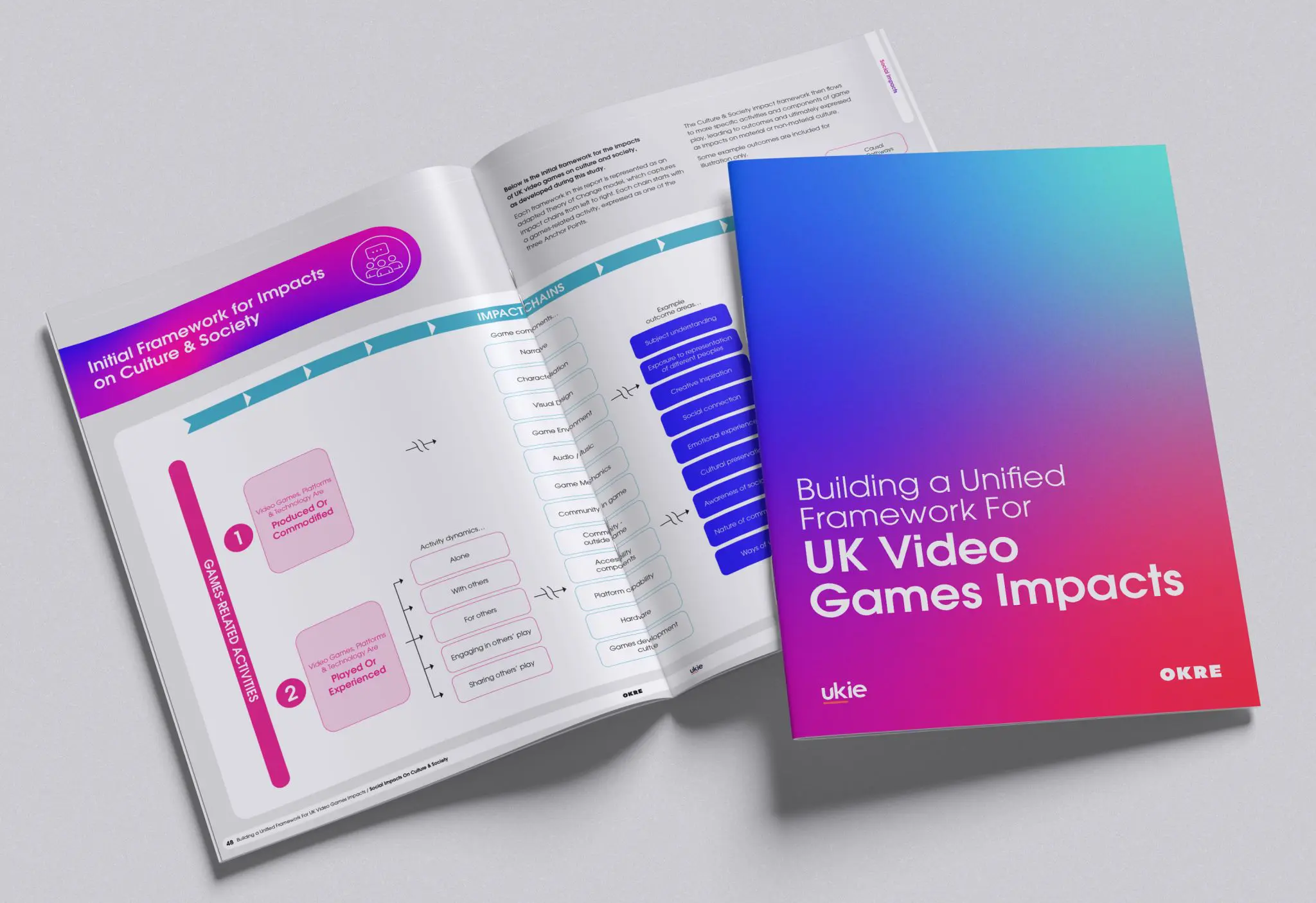
The result was our report ‘Building a Unified Framework for UK Video Game Impacts’ that called for a fresh, bold and honest approach to how we measure and talk about games – one that moves away from the binary discussions about ‘good’ or ‘bad’ impacts of games, and that sets up the industry to continue building a more sophisticated picture of games and the sector that makes them.
The report also crucially provides research frameworks for the sector’s wide-ranging impacts, along with a reframed sector definition and interactive supply chain visualisation. In doing so it lays the foundations for a unified impact framework for the social and economic impacts of the UK video games sector, offering a truly innovative means of understanding its widespread and powerful influence.
Through both supply chain mapping and a pioneering impacts framework, the report also identifies how video games are rapidly crossing over into other industries, such as Healthcare, Education and Defence and is shaping culture across Fashion, Music, Film and TV.
Our ultimate goal is to establish a foundation for researchers and policymakers to better understand, evidence and maximise the diverse ways that games generate meaningful real-world value; when games need to unlock fresh funding routes and are still misunderstood by parents, being dragged into wider conversations about social media use and the digital marketplace, this has never been more important.
To achieve our goal we need academia, games businesses and other sectors to come together to fund new research, generate data and share the results.
Since we launched the report, it’s been great to see so many people within the industry engage with our findings and share their experiences of how games or games technology impacts people beyond play. We’re excited to continue this discussion with publishers, developers as well as the academic research community, to explore new opportunities for in depth research that will support a deeper understanding of the sector.
Research really is the games industry’s secret super-power to unlock more support and growth. Continuing to build a fuller picture of its impact will unlock decisions about games innovation, policy support, partnerships and investment and help us all build the strong foundations for sustainable game sector growth.
So if you’re a games business, wanting to share the ways that you think your games make an impact on players, culture and society or an academic interested in the sector, we want to hear from you and start to fill the crucial research gaps that our report has identified and that the games sector so badly needs.